





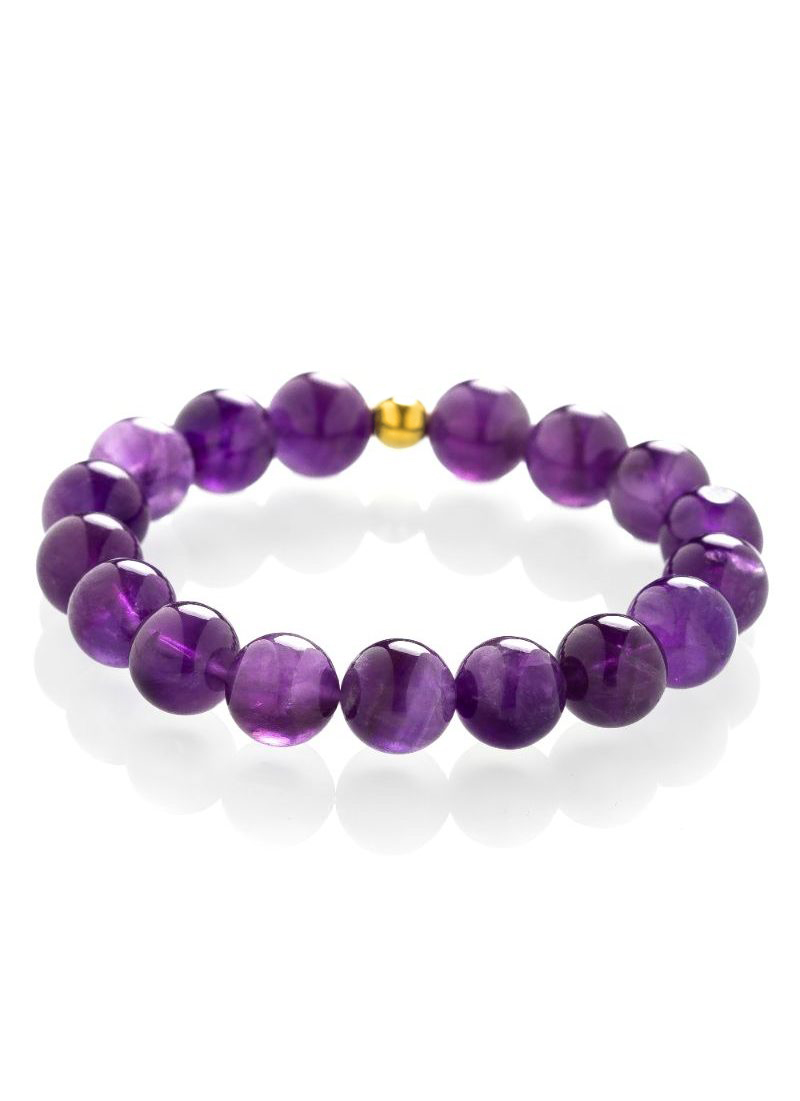
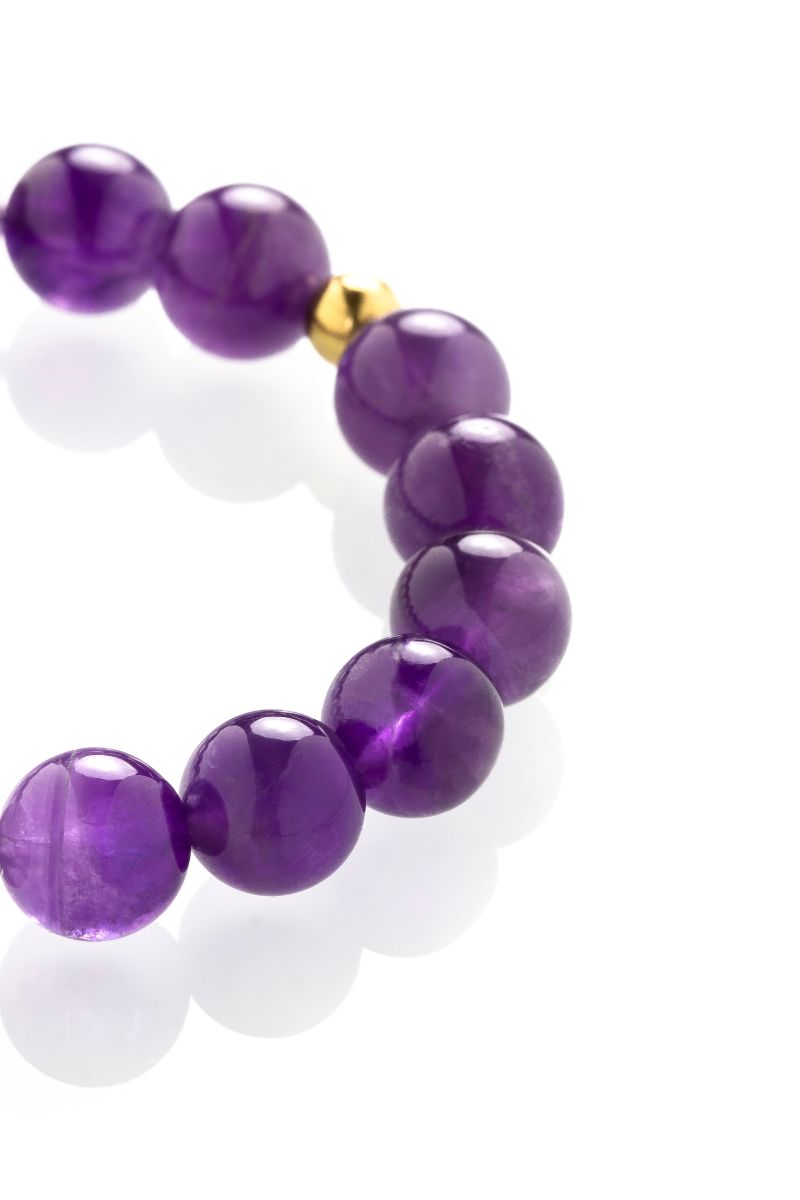
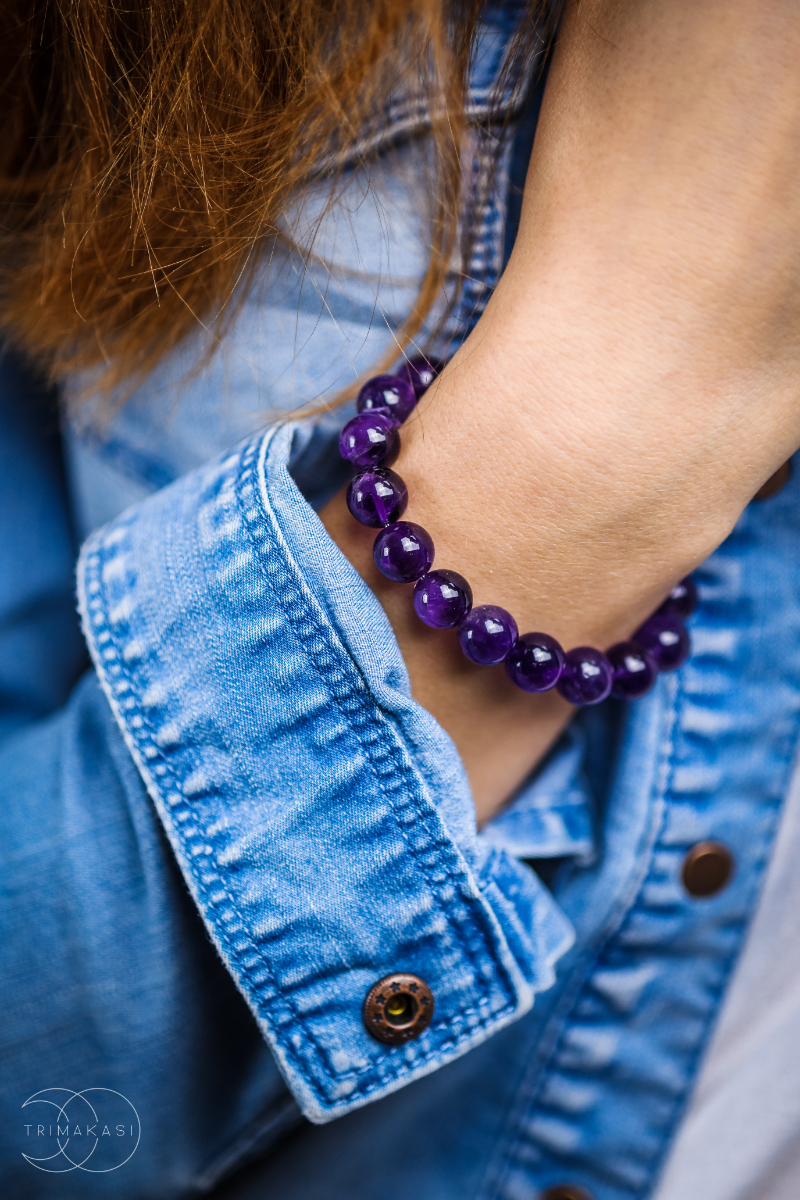



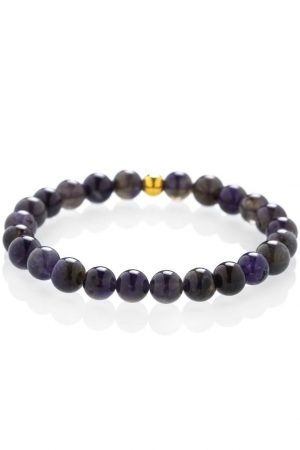
Bracelet Améthyste Foncé
$ 58 TVA incluse
Nous connaissons tous cette personne qui reste imperturbable malgré le tumulte ambiant : lucide, sereine, maîtresse d’elle-même. L’améthyste d’un violet profond est la pierre idéale pour elle, portée depuis des siècles pour apaiser l’esprit, calmer les pensées et favoriser les choix judicieux. Enfilez ce bracelet en améthyste et laissez-vous envahir par cette sérénité.
Choisissez un bracelet par sa taille et par la couleur de la dernière perle. Vous trouverez ici des instructions sur la façon de déterminer correctement la taille.
Améthyste – Signification
Peu de pierres sont chargées d'histoire à travers leur couleur. Le violet profond a toujours été la couleur de la royauté, et pendant des siècles, ce quartz cristallisé a orné les bijoux de couronnement et figuré sur les bagues des rois et des évêques comme symbole de majesté et de discernement. Jusqu'à la découverte de vastes gisements en Amérique latine, l'améthyste comptait parmi les gemmes les plus précieuses au monde – et les perles sombres et intenses de ce bracelet arborent précisément cette teinte qui lui valut une telle vénération.
Derrière les apparences se cache une idée simple : la pureté mentale. L’améthyste est la pierre vers laquelle on se tourne lorsque l’esprit est encombré ; on lui prête le pouvoir de calmer le tumulte intérieur, de prendre du recul par rapport au bruit ambiant et de maintenir son sang-froid sous pression. Le calme qu’elle procure n’est pas l’apathie, mais l’ordre : la tradition veut que cette pierre clarifie la pensée plutôt que de la faire taire, raison pour laquelle elle a toujours été associée au discernement plutôt qu’à la simple relaxation.
Les récits anciens s'accordent sur cet effet stimulant. Les anciens Égyptiens emportaient l'améthyste au combat pour se fortifier. Léonard de Vinci croyait que la pierre pouvait dissiper les mauvaises pensées, renforcer l'intelligence et éveiller les sens ; il lui attribuait même le pouvoir de conclure favorablement des négociations commerciales. Son ancien nom hébreu, aklamah, partage une racine avec le mot “ rêve ”, un clin d'œil aux rêves intenses et à la douce intuition que l'améthyste est censée inspirer après la tombée de la nuit.
Malgré son passé prestigieux, l'améthyste reste discrète et douce, une pierre du quotidien facile à porter, associée à la prospérité, à l'amitié sincère et au courage de se confier à ceux qu'on aime. Au poignet, elle inspire la sérénité plutôt que l'ostentation : la pierre de celui ou celle vers qui l'on se tourne lorsque l'ambiance devient bruyante, avec la certitude tranquille qu'il ou elle saura gérer la situation.
Élément: Eau, Air
Signe du zodiaque: Verseau, Vierge, Sagittaire, Capricorne, Poissons, Cancer, Bélier
Ce bracelet harmonise les chakras du troisième œil et de la couronne.


| Poids | 0.05 kg |
|---|---|
| Dimensions | 22 × 22 × 3 cm |
Plus d'informations
Chaque perle étant unique, le bracelet peut légèrement différer des photos du produit en termes de couleur, de motif ou d'autres détails.
Le bracelet a été fabriqué en République tchèque.
Pour préserver son aspect et prolonger sa durée de vie, évitez les manipulations brutales et l'exposition à des conditions extrêmes, comme les hautes températures ou certains produits chimiques, qui pourraient endommager le cordon. Nous vous recommandons de retirer le bracelet avant de faire du sport, de dormir, de prendre un bain, une douche ou d'aller au sauna.
Soyez le premier à laisser votre avis sur “Dark Amethyst bracelet”
Vous aimerez peut-être aussi…







Produits apparentés



Avis
Il n’y pas encore d’avis.